During COVID-19, the company was forced to rethink its commercial strategy. With the usual distribution channels disrupted, the decision was made to create a proprietary product line and sell it directly to consumers online. This required building something from scratch — product, brand, and platform — simultaneously and quickly.
Several problems had to be solved in parallel: identifying viable suppliers, understanding pricing structures, delivery lead times, and volume discount tiers. On the product side, it was necessary to design and cost the product, define the assembly line, and run initial tests with real customers. On the commercial side, a brand identity and an online sales platform needed to be live as fast as possible.
The project was split into three parallel tracks: product, brand, and platform. Each had hard dependencies on the others — the platform could not go live without the product being approved, and the brand work needed to be done before photography. Running these tracks in parallel, rather than sequentially, was what made the one-month deadline achievable.
Product
Supplier research covered availability, pricing, delivery times and volume rappels. The assembly line was defined, the product was costed, and initial samples were tested with a small group of customers. Once approved, manufacturing documentation was produced: tolerances, production methods and assembly specifications.
Brand
A product photography session was organised, followed by image editing and visual brand creation. These initial assets were later refined with a print shop for final production quality.
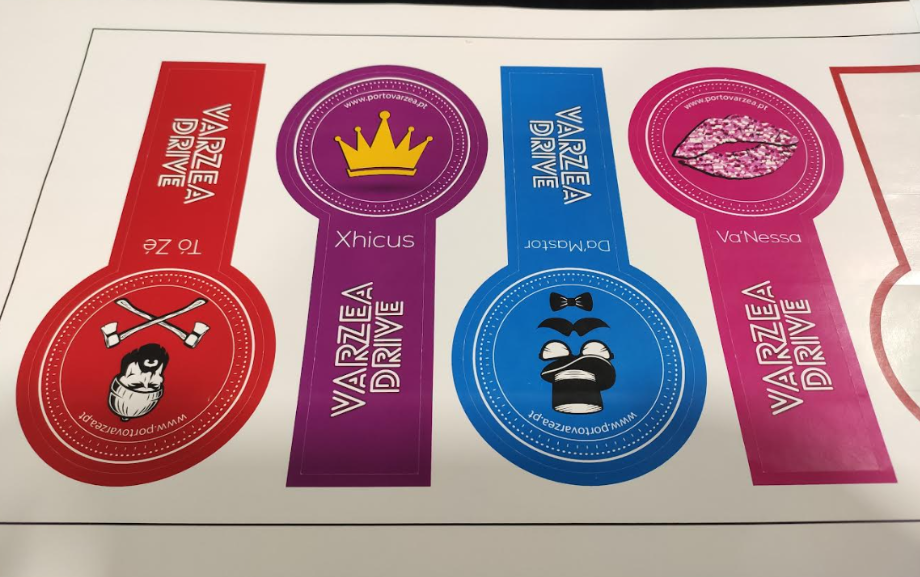
Final printed labels for the four product variants — refined with the print shop.
Platform
A WordPress + WooCommerce store was deployed on AWS, chosen for speed of deployment over any other consideration. The platform was live in under one month.
Two technical integrations were built on top of the standard WooCommerce setup. A Google Maps API integration calculated the distance between the shop and the customer's delivery address, enforcing a maximum delivery radius of 11 km and applying a cost structure of a fixed fee plus a variable rate per km. A Telegram bot was also integrated to send an alert each time a new order was received.
The platform was live and operational in under one month. Products were available for home delivery with automated distance-based pricing. Customers tested and approved the product before it went to full production. Brand assets were documented and refined to production quality.
The AWS + WordPress stack was chosen purely for speed. It was not designed for scale or long-term maintainability — it was the right tool for the constraint, not the ideal architecture. The delivery radius and pricing logic were hardcoded around the specific geography and cost structure of the moment.
Not documented — this project served its purpose during a specific window and was not intended as a permanent infrastructure.